This immense mausoleum was built on the orders of Shah Jahan, the fifth Muslim Mogul emperor, to honor the memory of his beloved late wife."
Enviado pelo meu aparelho BlackBerry® da Vivo
18 May 2011 Last updated at 22:51 ET
By Mark Kinver
Science and environment reporter, BBC News
Current extinction rate projections may be overestimating the role of habitat loss on species, a study suggest.
Current methods are too simplistic and fail to take into account the full complexity of what influences species numbers, researchers observed.
Writing in the journal Nature, they said present figures overestimated rates by up to 160%, and called for updated, more accurate calculations.
But they did add that habitat loss was still the main threat to biodiversity.
Co-authors Professor Stephen Hubbell, from the University of California Los Angeles, and Professor Fangliang He, from Sun Yat-sen University, China, said existing mathematical models were flawed.
"The most widely used indirect method is to estimate extinction rates by reversing the species-area accumulation curve, extrapolating backwards to smaller areas to calculate expected species loss," they wrote.
"Estimates based on this method are almost always much higher than actually observed."
In ecology, a species-area curve is used to highlight a relationship between and area of habitat and the number of species found in the area.
They added that they defined extinction rate as the fraction of species lost as a result of habitat loss over a period of time.
"The area that must be added to find individual of a species is, in general, much smaller than the area that must be removed to eliminate the last individual of a species," the professors observed.
"Therefore, on average, it takes a much greater loss of area to cause the extinction of a species."
'Severe reservations'
Probably the most authoriative global assessment of the status of species is the Red List of Threatened Species, co-ordinated and published by the International Union for Conservation of Nature (IUCN).
Jean Christophe Vie, IUCN's species programme deputy director - who was not involved in the research - said it was good that it was a clear effort to "get the science right", but had very severe reservations about how it could be interpreted.
"I am quite worried about how this report could be used by people who are reluctant to take environmental issues seriously,"he told BBC News.
"We (IUCN assessors) do not use this system between area and species because we know there are flaws.
"We have explicit details in our guidelines that to estimate extinction is not something we should do; for example, we know that species are not evenly distributed in ecosystems; habitat loss is not the only threat."
Dr Vie explained that, very often, conservation agencies and NGOs tended to mobilise support when species crept towards extinction thresholds.
"What is the actual concern is the rate of decline in populations," he went on to say.
"You do not see that many extinctions, but you do see many more species that are ending up with very small populations.
"So, focusing purely on extinctions is - to me - a problem."
In their paper, Professors He and Hubbell warned that their study must not "lead to complacency about extinction (as a result of) habitat loss", which was a "real and growing concern".
"We have bought a little more with this discovery, but not a lot," Professor Hubbell observed.
Enviado pelo meu aparelho BlackBerry® da Vivo
BBC News
(http://www.bbc.co.uk/news/world-africa-13413947?utm_source=twitterfeed&utm_medium=twitter)
16 May 2011 Last updated at 21:45 ET
By Louise Orton
Western Sahara
Twenty years after a ceasefire brought a halt to a long-running conflict in Western Sahara, cluster bombs used by the Moroccan armed forces are still claiming victims - among them children attracted by their toy-like size and shape.
Out herding goats with his younger brother Hassan, 13-year-old Said caught sight of what he thought was a small ball.
He threw a stone at it to check. It exploded instantly - embedding metal fragments into his chest and neck. He died of his injuries in hospital three days later.
Four years after their brother's death, Hassan, now nine, cannot wipe the images of what happened from his mind.
For months he did not speak - even today he remains quiet and withdrawn.
Said is one of 2,500 people to have been wounded or killed by cluster munitions and landmines in the years following the 1975-1991 conflict in the disputed North African territory of Western Sahara.
He was killed by a BLU 63, the size and shape of a tennis ball, dark green in colour and the most widely used cluster munitions in the conflict.
A cluster bomb contains hundreds of these bomblets, which it releases as it falls.
The BLU 63 bomblets have little fins or "flutes" that make them spin as they drop. In theory, the fuse in each goes off when they reach a certain number of revolutions per minute. Each bomblet goes off at roughly the same time, killing people or destroying vehicles over an area equivalent to two or three football pitches.
However, many fall to earth without detonating, where they may lie for years, until someone - often a civilian - stumbles across them.
According to the Cluster Munition Coalition, which campaigns for a worldwide ban on the weapons, almost two-thirds of cluster munition casualties are civilians, injured as they go about their day-to-day lives - and half of these civilian casualties are children like Said.
During the 16-year conflict in Western Sahara, Moroccan armed forces used artillery-fired and air-dropped cluster munitions against the Polisario Front, which, backed by Algeria, attempted to create an independent state for the Sahrawi people.
Most of these cluster munitions were produced in the US - the number of bomblets supplied by the US to Morocco up to 1995 is put, by UN agencies and others, at 2.5 million.
The good news is that 20 years since the end of the conflict, large areas have been made safe, including the region of Mehaires, where Said was killed. People are moving back home from refugee camps, small businesses are expanding and children are able to play or herd their animals in safety.
Of the 10,000 cluster bomblets cleared from the eastern part of the country by the non-governmental organisation Action on Armed Violence roughly two-thirds have been BLU 63s.
The bad news is that work is only just beginning to clear 130 sq km (50 square miles) of suspected minefields in the east of the country, and a buffer strip on either side of a 1,000-mile defensive wall dividing the country is thought to be heavily contaminated with ordnance of every kind.
The area remains too politically sensitive for any clearance operation.
Said's experience proves that cluster bomblets, like landmines, can pose a hazard years, or even decades, after soldiers have left the battlefield.
But while an international treaty banning anti-personnel landmines was signed as far back as 1997, and came into force before the end of the century, a convention banning cluster munitions was only agreed in 2008.
It came into force last year, and has been ratified by 57 states.
Major producers of cluster munitions, such as the US, Russia and China, have yet to sign up, but Steve Goose, Arms Division director of Human Rights Watch, sees the treaty as a death knell for this kind of weapon.
"The stigma will grow and deepen over time, and ultimately make the use of cluster munitions unthinkable by anyone," he says.
The US has already passed legislation banning exports of cluster munitions unless 99% or more of the bomblets can be guaranteed to explode - a standard very few existing US weapons meet.
And while Washington has not signed the Convention on Cluster Munitions this does not mean that it will not feel pressure to comply with it, Human Rights Watch points out.
It has not signed the mine ban treaty either, but it has not used, exported, or produced any anti-personnel landmines since the treaty was negotiated.
Enviado pelo meu aparelho BlackBerry® da Vivo
Wild Nature
Published May 13, 2011
| FoxNews.com
(http://www.foxnews.com/scitech/2011/05/13/cell-phones-caused-mysterious-worldwide-bee-deaths-study-finds/)
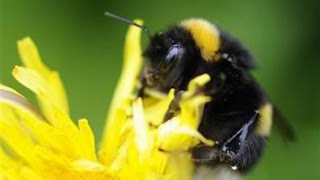
Cellphone transmissions may be responsible for a mysterious, worldwide die off in bees that has mystified scientists.
Dr. Daniel Favre, a former biologist with the Swiss Federal Institute of Technology in Lausanne, Switzerland, carefully placed a mobile phone underneath a beehive and then monitored the reaction of the workers.
According to a story in The Daily Mail, the bees were able to tell when the handsets were making and receiving calls. They responded by making the high pitched squeaks that usually signal the start of swarming.
"This study shows that the presence of an active mobile phone disturbs bees -- and has a dramatic effect," Favre told the Daily Mail.
Favre believes this to be evidence of something other scientists have suggested: Signals from mobile phones are contributing to the decline of honeybees. Favre thinks more research could help confirm the link between cell signals and "colony collapse disorder" -- the sudden disappearance of entire colonies over winter -- which has halved the bee population, according to some estimates.
Last June, researchers from Chandigarh's Punjab University in India came to a similar conclusion, recording a decrease in the population of a hive fitted with a mobile phone and a decrease in the egg output of the queen in that hive.
Other bee experts blame the vanishing honeybees on changes in farming, the decline of wild flowers and pesticides, and the final cause of the dramatic die-off remains unclear.
Even the size of the problem is hard to determine.
A recent three-year study analyzed the geographic distribution and genetic diversity of eight species of bumble bees in the U.S., relying on historical records and repeated surveys of about 400 sites, to ascertain precisely how many bees have vanished. The researchers compiled a database of more than 73,000 museum records and compared them with current sampling based on intensive national surveys of more than 16,000 specimens.
The national analysis found that the relative abundances of four of the eight species analyzed have declined by as much as 96 percent and that their surveyed geographic ranges have shrunk by 23 to 87 percent. Some of these contractions have occurred in the last two decades.
"We have 50 species of bumble bees in North America. We've studied eight of them and four of these are significantly in trouble," said University of Illinois entomology professor Sydney Cameron, who led the study. "They could potentially recover; some of them might. But we only studied eight. This could be the tip of the iceberg," she said.
Enviado pelo meu aparelho BlackBerry® da Vivo
Fundamental à garantia dos direitos fundamentais do cidadão! Os autores são feras!
Ricardo Bampa - Qui, 12 Mai, 2011 | 09:25:28
------------------------------------------------
Conjur - Consultor Jurídico
(http://www.conjur.com.br/2011-mai-12/acordao-stf-quebra-sigilo-fisco-seguido-risca?utm_source=twitterfeed&utm_medium=twitter)
quinta, dia 12 de maio de 2011
Por Daniel Müller Martins e José Carlos Cal Garcia Filho
Após cinco meses do julgamento ocorrido nas últimas sessões de 2011, foi publicado o acórdão do Recurso Extraordinário 389.808, relatado pelo ministro Marco Aurélio, em que o Supremo Tribunal Federal discutiu a possibilidade de a Receita Federal acessar, diretamente, sem autorização judicial, os dados relativos às operações financeiras dos particulares.
Estava em jogo a constitucionalidade do artigo 5º da Lei Complementar 105/2001 que, em síntese, autoriza a administração tributária a solicitar informações relativas ao sigilo bancário das pessoas naturais e jurídicas.
No caso concreto, tratava-se de fiscalização da Receita Federal, na qual houve encaminhamento de ofício à instituição financeira onde a contribuinte mantinha conta-corrente, visando ter acesso aos dados e extratos bancários relativos ao período fiscalizado.
Por maioria de votos, o STF entendeu ser indispensável a prévia manifestação do Poder Judiciário para que seja legítimo o acesso da Receita Federal às informações que se encontram protegidas pelo sigilo bancário. E assim o fez em virtude de regra clara e inequívoca, constante do artigo 5º, inciso XII, da Constituição Federal, que prescreve que o sigilo de dados somente pode ser afastado mediante prévia autorização judicial.
Em verdade, embora essa decisão tenha sido a primeira a tratar do tema à luz da LC 105/2001, ela não representa novidade na jurisprudência da Suprema Corte. Como restou assentado nos votos vencedores, o acórdão está em linha de coerência com o entendimento pacificado do STF a respeito da privação de direitos fundamentais.
Como bem disse o decano da Corte, ministro Celso de Mello, a equação direito ao sigilo — dever de sigilo exige — para que se preserve a necessária relação de harmonia entre uma expressão essencial dos direitos fundamentais reconhecidos em favor da generalidade das pessoas (verdadeira liberdade negativa, que impõe, ao Estado, um claro dever de abstenção), de um lado, e a prerrogativa que inquestionavelmente assiste ao Poder Público de investigar comportamentos de trangressão à ordem jurídica, de outro — que a determinação de quebra de sigilo bancário provenha de ato emanado de órgão do Poder Judiciário, cuja intervenção moderadora na resolução dos litígios, insista-se, revela-se garantia de respeito tanto ao regime das liberdades públicas quanto à supremacia do interesse público.
Encontram-se citados no acórdão diversos precedentes do Pleno e das Turmas do Supremo Tribunal Federal — destaque para o rumoroso caso da quebra de sigilo do "caseiro Francenildo" — demonstrando-se que a Corte jamais divergiu quanto à exigência de manifestação judicial, devidamente fundamentada, em casos como o que se estava a discutir.
Para além da clareza da regra constitucional constante do artigo 5º, inciso XII, que não admite flexibilização, o STF reafirmou a importância do papel desempenhado pelos juízes na garantia dos direitos fundamentais dos cidadãos, porque presumivelmente ocupam posição de terceiros imparciais (terzietá) em relação aos interesses em disputa.
Os efeitos dessa decisão por ora estão limitados ao caso concreto e não vinculam as instâncias inferiores. Como se disse, porém, ela reafirma entendimento pacificado do Supremo Tribunal Federal. Não se pode esquecer, pois, que se trata de decisão do Pleno da mais alta corte do país e como tal deve ser entendida e respeitada. De pouca ou nenhuma validade são os exercícios de futurologia a respeito das próximas decisões do tribunal.
Em termos práticos, e sobretudo jurídicos, o princípio constitucional da segurança jurídica aponta para a necessidade de acatamento da decisão do Supremo Tribunal Federal, evitando-se decisões contraditórias e o envio desnecessário de recursos aos tribunais superiores. Afinal, o respeito à juridicidade e aos precedentes é um dos aspectos mais importantes do devido processo legal
Enviado pelo meu aparelho BlackBerry® da Vivo